Posts

New machine learning from Alibaba and Netflix, mimicking animal vision

Alibaba and Netflix share machine learning and data science software Two companies at the forefront of machine learning and data science have just released some of their tools under open source licenses. Chinese ecommerce giant Alibaba just  open sourced the algorithm libraries  for its Alink platform. The algorithms "are essential to support machine learning tasks such as online product recommendations and smart customer services." According to Jia Yangqing, president of Alibaba Cloud, Alink is a good fit for "developers seeking big data and machine-learning tools." You can find the source code for Alink (which is under an Apache 2.0 license)  on GitHub , with documentation in both Chinese and English. Not to be outdone, streaming service Netflix just released its  Metaflow Python library under an Apache 2.0 license. Metaflow enables data scientists to "see early on whether a prototyped model would fail in production, allowing them to fix whatever the ...
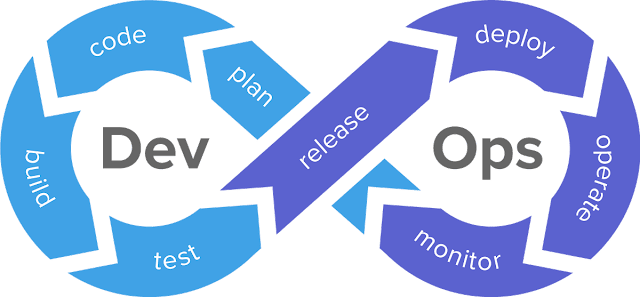

Transitioning to DevOps: The four priorities

Image
Enterprises across the world today are becoming increasingly interested in leveraging DevOps to deliver applications and services at a fast pace. However, at most organisations, awareness of DevOps has remained confined to abstract principles rather than practical knowledge. There is a strong misunderstanding about the purpose of DevOps and, as a result, many companies are far less confident in implementing agile operations on the ground. So, what do organisations need to look out for? And how can enterprises choose the right DevOps tools to suit their needs? Here are four priorities enterprises need to consider when transitioning to DevOps environments. Setting the goals What are we trying to achieve? Is it to modernise our applications? To transform our infrastructure to achieve agile development? Those are the questions organisations should be asking about any transition towards DevOps.  For uncertain organisations, the first step when it comes to DevOps is to...

The V programming language is now open source – is it too good to be true?

Image
Yesterday, a new statically-typed programming language named V was open sourced. It is described as a simple, fast, and compiled language for creating maintainable software. Its creator, Alex Medvednikov, says that it is  very similar to Go  and is inspired by Oberon, Rust, and  Swift . What to expect from V programming language Fast compilation V can compile up to 1.2 million lines of code per second per CPU. It achieves this by direct machine code generation and strong modularity. If we decide to emit C code, the compilation speed drops to approximately 100k of code per second per CPU. Medvednikov mentions that direct machine code generation is still in its very early stages and right now only supports x64/Mach-O. He plans to make this feature stable by the end of this year. Safety It seems to be an ideal language because it has no null, global variables, undefined values, undefined behavior, variable shadowing, and does bound checking. It supports immu...

Introducing CUE: An Open Source Data Validation Language

Image
A team of developers has introduced a new data constraint language —  CUE  that combines types and values into a single concept. It’s an open-source data validation language, inspired by Google’s General Configuration Language (GCL) and aims to make tasks that involve defining and using data simpler. CUE comes with two core properties that set it apart from other configuration languages. First, it considers types as values and second, these values are ordered into a lattice, a partially ordered set. Talking about applications of CUE, it includes data validation, data templating, configuration, code generation, querying, etc.  According to the  developers , “CUE merges the notion of schema and data. The same CUE definition can simultaneously be used for validating data and act as a template to reduce boilerplate. “Schema definition is enriched with fine-grained value definitions and default values. At the same time, data can be simplified by removing values ...

Node.js 13 releases with an upgraded V8, full ICU support, stable Worker Threads API and more

Image
Yesterday was a super exciting day for Node.js developers as Node.js foundation announced of Node.js 12 transitions to Long Term Support (LTS) with the release of Node.js 13. As per the team, Node.js 12 becomes the newest LTS release along with version 10 and 8. This release marks the transition of Node.js 12.x into LTS with the codename ‘Erbium’. The 12.x release line now moves into “Active LTS” and will remain so until October 2020. Then it will move into “Maintenance” until the end of life in April 2022. The new Node.js 13 release will deliver faster startup and better default heap limits. It includes updates to V8, TLS and llhttp and new features like diagnostic report, bundled heap dump capability and updates to Worker Threads, N-API, and more. Key features in Node.js 13 Let us take a look at the key features included in Node.js 13. V8 gets an upgrade to V8 7.8 This release is compatible with the new version V8 7.8. This new version of the V8 JavaScript engine bring...

10 advantages of open source for the enterprise

Image
Selecting technologies means committing to solutions that will support an active, growing business over the long term, so it requires careful consideration and foresight. When an enterprise bets on the wrong horse, the result is often significantly higher development costs and reduced flexibility, both of which can stick around for the long haul. In the past decade, adoption of open source software at the enterprise level has flourished, as more businesses discover the considerable advantages open source solutions hold over their proprietary counterparts, and as the enterprise mentality around open source continues to shift. Enterprises looking to make smart use of open source software will find plenty of great reasons to do so. Here are just some of them. 1 Community . Open source solutions geared toward the enterprise often have thriving communities around them, bound by a common drive to support and improve a solution that both the enterprise and the community benefit fro...

Apple doubles use of Swift in iOS 13 as it shifts away from Objective-C

Image
An analysis shows that Apple’s own use of Swift has doubled in iOS 13 as it further distances itself from Objective-C. First introduced by Apple in 2014, Swift is now the main programming language for development across Cupertino’s platforms. Adoption of Swift by third-party developers is high, but much of Apple’s operating system still uses Objective-C. Of course, much of Apple’s reason to continue using Objective-C code within its operating systems is that it’s legacy code which is still functional. As the old adage goes: “If it ain’t broke, don’t fix it”. That doesn’t mean Apple’s use of Swift isn’t increasing. Developer Alexandre Colucci has been  keeping tabs  on Apple’s use of Swift in its operating systems since iOS 9 and has produced some interesting findings. When Colucci began tracking Swift usage there was just a single binary in iOS 9 using it. In iOS 13, that number has increased to a whopping 141 binaries. Furthermore, if there was any doubt ...